Feature Article: Will Xi Jinping Launch a Surprise Attack on Taiwan Before the 20th Party Congress of the CCP in 2022? And What Happens if He Does?
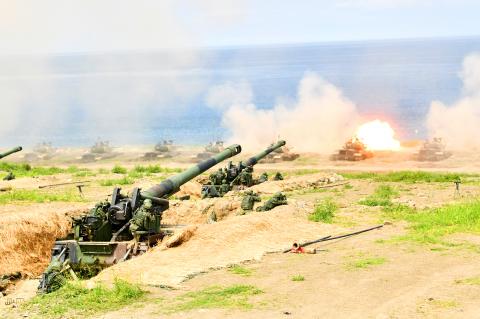
Over many years of forecasting we have always kept in mind the conclusion reached by a 1983 CIA study of failed forecasts: "Each involved historical discontinuity, and, in the early stages…unlikely outcomes. The basic problem was…situations in which trend continuity and precedent were of marginal, if not counterproductive value."
When you think about disruptive shocks that would almost certainly have a long lasting global impact, what’s the next one that comes to mind after COVID-19?
For us, it is a war between China and the United States. This analysis covers the following:
• Background: The Context in Which War Would Occur
• Why Do Nations Go to War?
• Why Xi Jinping Might Go to War – and Why He Might Not
• Recent Indicators
• The Potential Consequences of a US-China War
• Conclusions
Background: The Context in Which War Would Occur
Setting the Stage: “How China Sees the World”, by Lt. General H.R. McMaster, former US National Security Adviser
“Since the heady days of Deng Xiaoping, in the late 1970s, the assumptions that had governed the American approach to our relationship with China were these: After being welcomed into the international political and economic order, China would play by the rules, open its markets, and privatize its economy. As the country became more prosperous, the Chinese government would respect the
rights of its people and liberalize politically. But those assumptions are proving to be wrong.
“China has become a threat because its leaders are promoting a closed, authoritarian model as an alternative to democratic governance and free-market economics. The Chinese Communist Party is not only strengthening an internal system that stifles human freedom and extends its authoritarian control; it is also exporting that model and leading the development of new rules and a new international order that would make the world less free and less safe.
“China’s effort to extend its influence is obvious in the militarization of man-made islands in the South China Sea and the deployment of military capabilities near Taiwan and in the East China Sea”...
“The party’s leaders believe they have a narrow window of strategic opportunity to strengthen their rule and revise the international order in their favor—before China’s economy sours, before the population grows old, before other countries realize that the party is pursuing national rejuvenation at their expense, and before unanticipated events such as the coronavirus pandemic expose the vulnerabilities the party created in the race to surpass the United States and realize the China dream”.
“The party has no intention of playing by the rules associated with international law, trade, or commerce. China’s overall strategy relies on co-option and coercion at home and abroad, as well as on concealing the nature of China’s true intentions. What makes this strategy potent and dangerous is the integrated nature of the party’s efforts across government, industry, academia, and the military.
Setting the Stage: “The Shape of a Real Grand Strategy”, by Giselle Donnelly
“Chinese power, even Chinese “soft power”, is inherently coercive, not meant to attract, but to intimidate, to create not partners but tributaries, providers of natural materials, or both. This is not merely the case in Asia, but globally.”
Donnelly also pointedly highlights Xi Jinping’s admonition to the 19th Chinese Communist Party Congress in 2017: “The wheels of history roll on. The tides of the time are vast and mighty. History looks kindly on those with resolve, with drive and ambition, and with plenty of guts. It won’t wait for the hesitant, the apathetic, or those shy of a challenge.”
Setting the Stage: Dr. Tony Saich’s 9Sep20 “Testimony Before the US-China Economic and Security Review Commission”:
“What is the current state of the social contract between the CCP and the Chinese populace? What do Chinese citizens expect from the CCP, and how satisfied are they with the CCP’s performance? How have these changed over time?”
It is incorrect to refer to the arrangement between the Chinese people and the Chinese Communist Party (CCP) as a “social contract” as this implies that both sides have entered into to the contract knowingly and freely. This is clearly not the case as there is no way for Chinese citizens to express their views on such a “contract.” That said, there seems to be an implicit agreement on the part of many that the CCP is expected to deliver stability, economic progress, and social support for its citizens. This is referred to as “performance legitimacy.” It is distinct from CCP appeals to ideology or nationalism. It is pragmatic in nature with concrete goals covering economic growth, stability, and the enhancement of national power.”
“Performance legitimacy is fragile as measures such as good performance can wax and wane. It is inherently unstable and thus is insufficient for maintaining power, as citizens will grow used to the progress, pushing government to produce ever better outcomes to maintain its rule. If the economy continues to slow and the largesse to dispense benefits diminishes, does this mark the end to legitimacy based on economic performance?” …
“There are three predominant analyses about how Chinese citizens view their government and what the likely consequences might be.
“First, there is the view that the government is sitting on a ‘social volcano’ stoked by the rising expectations, worsening income inequality, and with citizens now having alternative information sources, there could be a crisis that triggers large-scale political unrest.”
“Second, there is the view that performance legitimacy has been effective with citizens crediting the CCP for decades of rapid income growth and therefore they are not likely to challenge its rule, unless performance drops precipitously.”
“Third, there is the view that maintains that the CCP’s grip on social order is so powerful that even a clear failure of leadership would be unlikely to affect the loyalty of most Chinese citizens.”
“The rejection of any meaningful political reform would indicate that absent coercion, the administration will remain increasingly reliant on ensuring citizen satisfaction via the provision of public goods and services. Satisfaction trends can reverse, as citizens accustomed to increases in living standards and the benefits they are provided will expect them to continue.”
There are three challenges. The first two depend on how well the government deals with the problem of corruption and the environmental damage that have been part and parcel of the reform program. The third relates to the levels of local government debt. The ability to continue providing public goods will depend on there being adequate fiscal revenue. We know that many local governments in China are heavily indebted and this could diminish their ability to keep up social investment. If economic growth continues to decline, providing adequate financial support could become more problematic…[Rising] debt combined with the aging of the population will place a major strain on government budgets and China might find itself locked into the common “guns versus butter” debates.”
Setting the Stage: “Secrecy and Stratagem: Understanding China’s Strategic Culture”, by Thomas Mahnken
“China’s national strategic culture has four tenets:
• China is culturally superior;
• China’s natural position is that of the “Middle Kingdom”;
• China must be unified internally and free from external meddling; and
• War is costly, destructive, and leads to internal dissension.”
“China’s military strategic culture also has four tenets:
• Safeguarding Chinese territorial integrity is an important military mission;
• The goal of strategy is to exploit the propensity of things, or shi, to achieve one’s objectives;
• War is a scientific process; and
• Through secrecy and stratagem, it is possible to achieve a decisive victory against a superior adversary.”
Setting the Stage: “Which Way The Dragon? Sharpening Allied Perceptions Of China’s Strategic Trajectory”, by Ross Babbag
“This report argues that China’s future trajectory and that of the broader Indo-Pacific region are inherently unstable. There is a strong possibility, maybe a probability, of major changes in the strategic landscape by 2035…
“The geographic and demographic features of China 15–20 years hence are relatively easy to discern. However, many other factors are much more dynamic and could shift in multiple directions in the period ahead…
“The assumption made by many in the West that the rapid rate of economic growth that China has experienced during the last three decades will be maintained during the 2020s is possible but very unlikely. China’s rate of GDP growth has already halved since 2007 and continues to slow. Productivity levels are also falling along with international competitiveness in many sectors. National debt is very high and the budgetary burdens of a rapidly aging population are increasing. In the face of these challenges, as well as biosecurity and other pressures, Xi Jinping’s instinct is to clamp down harder on information flows, further tighten party control, increase the centralization of power and work hard to maintain a sense of normality. Important consequences of this approach are to further constrain economic dynamism and increase the unpredictability of China’s trajectory to 2035…
“China’s current strategic situation is characterized by multiple instabilities and uncertainties. While it is possible that China will continue on its current trajectory towards 2035, it is more likely that there will be significant departures…These important but very uncertain variables include:
1. The power, performance, and durability of the Chinese Communist Party regime.
2. The economic, technological, and corporate progress of the country.
3. The extent to which the regime employs the country’s modernized military aggressively beyond China’s borders.
4. The level of international cooperation or resistance that confronts China.
5. Whether the Chinese regime will seek to rally the country by adopting highly nationalistic rhetoric and international stances.
6. The extent to which the Chinese regime moves to expand its international political, economic and military footprint in key parts of the Indo-Pacific region and beyond” …
“Credible combinations of these ‘driving forces’ [are used] to derive four alternative futures for China—and effectively for the region—in 2035:
1. Xi Jinping’s Dream—a future where just about everything goes well for Xi Jinping and the Chinese Communist Party.
2. Muddling Through—a future where the Chinese regime encounters a series of economic, international and political disappointments but, despite diminished credibility at home and abroad, survives into the late 2030s.
3. Nationalist Drive—a future where serious economic, social, international, and political difficulties cause sporadic outbursts of political dissent. A succession of domestic crises highlights the inadequacies of the party leadership and triggers the replacement of Xi Jinping and most of the current party hierarchy by a nationalist regime with an assertive international stance.
4. Macro-Singapore—a future where economic, social and political difficulties mount but Xi Jinping moves decisively to alter the country’s direction. He institutes far-reaching economic and social reforms, reduces the country’s military and international footprint, and negotiates a genuinely cooperative partnership with the West.”
Setting the Stage: “China's Grand Strategy: Trends, Trajectories, and Long-Term Competition” by Scobell et al
“Any one of the four scenarios is possible three decades hence:
• Triumphant China is least likely because such an outcome presumes little margin for error and the absence of any major crisis or serious setback between now and 2050.
• Imploding China is not likely because, to date, Chinese leaders have proved skilled at organizing and planning, adept at surmounting crises, and deft at adapting and adjusting to changing conditions.
• By 2050, China most likely will have experienced some mixture of successes and failures, and the most plausible scenarios would be an Ascendant China or a Stagnant China. In the former scenario, China will be largely successful in achieving its long-term goals, while, in the latter scenario China will confront major challenges and will be mostly unsuccessful in implementing its grand strategy.”
Why Do Nations Go to War?
Over the years, many analyses have been written about why nations go to war. One of the best known is Geoffrey Blainey’s classic book, The Causes of War. He argues that wars occur when leaders misjudge their nation’s relative strength, which is based on seven factors:
• Military strength;
• Estimates of how third party nations will behave in case of war (e.g., with which combatant they would ally, how much their contribution would be worth, or whether they would stay neutral);
• Perception of the internal unity of the enemy’s and your own nation;
• Strength of your nation’s and your enemies’ memories of their respective suffering in previous wars they have fought;
• Estimates of your nation’s and your enemy’s capacity to economically sustain the costs of war;
• Strength of your nation’s nationalism (and in some cases, ideology) compared to your enemy’s;
• Perception of the personality, mental quality, and will of the enemy’s leader(s) relative to your own.”
Other scholars note that in rare occasions, nations will go to war, even when the odds are against them, because they believe they have no other choice.
The classic example usually given is Japan’s decision in 1941 to launch a surprise attack on the United States, following Franklin Roosevelt’s August 1, 1941 decision to cut oil exports to Japan. At the time, the US provided 80% of Japan’s oil supply. Its best alternative source of oil required an attack on the Dutch East Indies, which Japan believed would inevitably result in the United States declaring war.
Why Xi Jinping Might Attack Taiwan – and Why He Might Not
What arguments might his advisors make to Xi Jinping to convince him to launch an attack on Taiwan? They might include some or all of the following:
• Following China’s passage of its new National Security Law and the de facto end of “One Country, Two Systems” in Hong Kong, peaceful unification with Taiwan seems more remote than ever before, as evidenced by the reelection of Tsai Ing-wen as the latter’s president. Her nationalist Democratic Progressive Party does not support unification with the mainland.
• Hal Brands notes in “If America and China Go to War, It Won’t Be an Accident”, that “If China concludes that Taiwan is distancing itself too far from the mainland politically, as [China perceives] the balance of power shifts in Beijing’s favor militarily, then it might decide that war is better that letting the dream of unification slip away.”
• Similarly in a Hoover Institution Webinar with former US Secretary of State Condoleeza Rice, Chris Patton, the last British Governor of Hong Kong opined that, with respect to an attempt to seize Taiwan, “If Xi thought he could get away with it, he’d try it.”
• Brands also speculated that, “if Chinese leaders worry that their domestic legitimacy is slipping [e.g., because of sharply declining economic performance], they might behave more belligerently in a crisis, for fear that war is less dangerous [to the CCP’s hold on power] than humiliation [in a crisis with the United States].”
• In the same vein, Michael Beckley has concluded that, “Beijing’s newfound assertiveness looks at first glance like the mark of growing power and ambition. But in fact it is nothing of the sort. China’s actions reflect profound unease among the country’s leaders, as they contend with their country’s first sustained economic slowdown in a generation and can discern no end in sight. China’s economic conditions have steadily worsened since the 2008 financial crisis. The country’s growth rate has fallen by half and is likely to plunge further in the years ahead, as debt, foreign protectionism, resource depletion, and rapid aging take their toll… When rising powers have suffered such slowdowns in the past, they became more repressive at home and more aggressive abroad. China seems to be headed down just such a path” (“The United States Should Fear a Faltering China”. See also, “China’s Coming Upheaval Competition, the Coronavirus, and the Weakness of Xi Jinping”, by Minxin Pei).
• In his book, “The Kill Chain”, Christian Brose (the late US Senator John McCain’s national security adviser) describes in great detail how China has focused on developing and deploying military systems designed to given it an asymmetric advantage over the United States, in order to win a war in the Western Pacific.
• The Trump administration has weakened many of the United States’ alliance relationships.
• Domestically, the US appears to be wrought by strongly held partisan divisions that could weaken public support for any reaction to a Chinese invasion of Taiwan, if care was taken to minimize US casualties.
• The US may be embroiled in a prolonged constitutional crisis following the November election.
• The US business community is likely to argue against a strong military response to the invasion of Taiwan (e.g., see, “America’s China Class Launches a New War Against Trump”, by Lee Smith, and “US companies defy Trump’s threats about ‘decoupling’ from China”, Financial Times 9Sep20).
• Xi might also conclude that the United States decision to cut off Chinese technology firms’ access to advanced technology from the United States will be so harmful to its economy as to justify an attempt to seize Taiwan Semiconductor’s chip fabrication plants, which are among the world’s most advanced and largest volume suppliers (e.g., see, “The Geopolitics of Semiconductors” by the Eurasia Group, “US-China Fight Spreads to the Chip Factory”, by Ina Fried, “The Chip Wars of the 21st Century” by Steve Blank, “AI Chips: What They Are and Why They Matter” by Khan and Mann”, and “Could Donald Trump’s War Against Huawei Trigger a Real War With China?” by Graham Allison).
What arguments might other advisors make to Xi Jinping to convince him NOT to launch an invasion of Taiwan?
• China recently publicized the results of a wargame that showed it could successfully conquer Taiwan. However a 24Sep20 article in India Defence News raised some practical objections to this conclusion. To begin with, there is “the well-known phrase that no battle plan survives first contact with the enemy.” Second, the assumption that an attacking Chinese force would quickly ’suppress’ any US intervention is, at the very least, optimistic if not absurd, based upon any kind of objective analysis…Also, the assumption that attacking Chinese forces could destroy Taiwan’s air defences in a few hours seems highly suspect.”
• If seizing Taiwan’s semiconductor chip fabrication plants intact is a critical objective of any invasion, there is no guarantee that they will not be destroyed.
• Many other analyses have noted that China does not have significant experience of actual combat, much less combat against a peer competitor (e.g., “People Win Wars: The PLA Enlisted Force and Other Related Matters”, by Clay and Blasko). Reports indicate that in China’s recent attack on Indian troops in the Himalayas, it incurred a significant (and thus far undisclosed) number of casualties (see, “China Is Paying A High Price For Provoking India”, by Brahma Chellaney from ASPI). There are also continuing concerns about the impact of corruption in the PLA on its warfighting effectiveness and political reliability (e.g., “The Consolidation of Political Power in China Under Xi Jinping: Implications for the PLA and Domestic Security Forces”, by Timothy Heath from RAND).
• A further uncertainty is potential domestic political reaction to a large number of Chinese casualties, almost all of who will be, due to the one child policy, their families’ only child. As RAND’s Andrew Scobell notes in “Something Old, Something New: Continuity and Change in China’s Foreign Policy”, “Chinese leaders are preoccupied with maintaining domestic stability and tend to be ultrasensitive to the prospect of chaos.” See also, “If China Loses a Future War, Entropy Could be Imminent”, by Jan Kallberg.
• Following China’s recent attack on Indian troops in their disputed border region, Russia suspended deliveries of its most advanced S-400 air defense missile system (since Russia has historically had close relations with India, while China has allied with Pakistan). This is critical because S-400 batteries located near Taiwan that can cover all of the latter’s airspace are likely critical to any Chinese invasion plans e.g., “How China’s New Russian Air Defense System Could Change Asia”, by Timothy Heath). S-400 deliveries to China only began in 2018, and it is unclear how many have been delivered and whether operational training by Russian advisers have been completed.
• Chinese war plans almost certainly include the aggressive use of cyber weapons to limit the United States’ ability to respond. As Burke et al describe in “China’s Strategic Culture”, its military doctrine “recognizes the centrality of information both as a domain in which war occurs and as the central means to wage military conflict when the dominant mode of warfare is confrontation between ‘information-based systems-of-systems’”. Similarly, in “How to Prevent a War in Asia”, Michele Flournoy (who is touted as the next US Secretary of Defense if Biden wins the November election) notes that China “relies on “system destruction warfare”—crippling an adversary at the outset of conflict, by deploying sophisticated electronic warfare, counterspace, and cyber-capabilities to disrupt what are known as C4ISR networks (command, control, communications, computers, intelligence, surveillance, and reconnaissance), and thereby thwarting its power projection and undermining its resolve.”
• Aggressive use of cyber weapons and attacks will very likely occur under both a war plan that seeks rapid victory and presents the US with a fait accompli, or one that is based on an all out attack on US assets in the Western Pacific and perhaps the homeland too. In both cases, cyber attacks would almost certainly be used in an attempt to blind US military information systems (probably accompanied by attacks on space based surveillance and communications assets), and very likely to shut down critical infrastructure (e.g., power) around military bases in the United States.
• However, many recent analyses have highlighted that cyber attacks by China would almost certainly lead to rapid escalation of a conflict with highly unpredictable consequences (e.g., “The Escalation Inversion and Other Oddities of Situational Cyber Stability”, by Jason Healey, Robert Jervis, “Wormhole Escalation in the New Nuclear Age”, by Rebecca Hersman, “Deterrence in the Age of Thinking Machines”, by Wong et al from RAND, “Preparing the Cyber Battlefield: Assessing a Novel Escalation Risk in a Sino-American Crisis”, by Buchanan and Cunningham, and “Would China Go Nuclear?” by Catlin Talmadge).
• An even more aggressive Chinese attack plan (which would likely trigger nuclear retaliation) would be the detonation of an electromagnetic pulse weapon (a high altitude nuclear blast) over the United States in an attempt to shatter the economy in one blow by knocking out electric grids, gas and water pipelines, and unshielded electronic equipment (e.g., your computer, your television, your phone, and all the electronics in the nation’s hospitals) . In “CHINA: EMP THREAT: The People’s Republic of China Military Doctrine, Plans, and Capabilities for Electromagnetic Pulse (EMP) Attack”, Dr. Peter Vincent Pry, the Executive Director of the EMP Task Force on National and Homeland Security notes that, “China's military doctrine regards nuclear HEMP (High Altitude Electro Magnetic Pulse) attack as an extension of information or cyber warfare, and deserving highest priority as the most likely kind of future warfare. Chinese military writings are replete with references to making HEMP attacks against the United States as a means of prevailing in war.”
• A successful conquest of Taiwan and victory over the US in a Western Pacific War would almost certainly strengthen the emerging global alliance to contain China. Absent an overwhelming victor over the US, China would be unlikely to receive much help from allies of its own (see the recent RAND analysis by Derek Grossman, “China’s Friends are Few and Unreliable”). Finally, a Chinese victory could lead to an embargo of maritime imports of energy and food on which it depends (implemented by blocking the Straits of Malacca and other maritime choke points). Overcoming these threats would require an overwhelming defeat of the United States, which would very likely breach the nuclear threshold.
Recent Indicators
There is no shortage of recent headlines indicating a sharp increase in the China-US conflict over Taiwan. Here are just a few:
• “China Set Its Sights on Taiwan After Hong Kong Crackdown” – Bloomberg
• “China Launches Combat Drills In Taiwan Strait, Warnings US Not To Play With Fire” – Washington Post
• “China Ramps Up A War Of Words, Warning The US Of Its Red Lines” – New York Times
• “US Warns China Against Taiwan Attack, Stresses US Ambiguity” – Reuters
• “China’s Sabre-Rattling Over Taiwan Rises As US Tensions Grow” – Financial Times
• “China Air Force Video Appears To Show Simulated Attack On U.S. Air Base On Guam” -- Reuters
• “China Warns U.S. It May Detain Americans - Blunt Message Suggests U.S. Nationals In China At Risk Of Becoming Hostages” -- Wall Street Journal
• “Chinese Military Beefs Up Coastal Forces As It Prepares For Possible Invasion Of Taiwan” – South China Morning Post
The Potential Consequences of a US-China War
What would happen if China invades Taiwan and the United States intervenes?
The US public is largely unaware that multiple analyses predict that if it was fought today, the US would very likely lose the initial phase of a war with China in the Western Pacific. These analyses include:
• “The Scary Wargame Over Taiwan that the US Loses Again and Again”, by Richard Bernstein
• “How the U.S. Could Lose a War With China”, by Kathy Gilsinan
• “Could A Chinese Surprise Attack Beat The US Military?” by David Axe
• “How Does The Next Great Power Conflict Play Out? Lessons From A Wargame”, by James Lacey
• “What War With China Could Look Like”, by Todd South
• “We Asked an Expert to Imagine a U.S.-China War. We Wish We Hadn't”, by Robert Farley
• “How the United States Could Lose a Great-Power War”, by Colby and Ochmanek
• “A History of the 2025 Sino–American War in the South China Sea”, by Michael Auslin
• “The War that Never Was” (parts 1 and 2)”, by Winnefeld and Morell
• “In Future Wars, the U.S. Military Will Have Nowhere to Hide”, by Michael Beckley
In “War With China: Thinking Through the Unthinkable”, Gompert et al from RAND take a longer term view, and describe four different paths a war between the US and China could take.
“Technological advances in the ability to target opposing forces are creating conditions of conventional counterforce, whereby each side has the means to strike and degrade the other’s forces and, therefore, an incentive to do so promptly, if not first. This implies fierce early exchanges, with steep military losses on both sides, until one gains control…
“Unless both US and Chinese political leaders decline to carry out counterforce strategies, the ability of either state to control the ensuing conflict would be greatly impaired…
“[A protracted] conflict could be decided by domestic political, international, and economic factors, all of which would favor the United States in a long, severe war. Because much of the Western Pacific would become a war zone, China’s trade with the region and the rest of the world would decline substantially. China’s loss of seaborne energy supplies would be especially damaging. A long conflict would also expose China to internal political divisions”…
“The path of war might be defined mainly by two variables: intensity (from mild to severe) and duration (from a few days to a year or more). Thus, we analyze four cases: brief and severe, long and severe, brief and mild, and long and mild. The main determinant of intensity is whether, at the outset, U.S. and Chinese political leaders grant or deny their respective militaries permission to execute their plans to attack opposing forces unhesitatingly. The main determinant of duration, given that both powers have the material wherewithal to fight a long war, is whether and when at least one side loses the will to fight or calculates that continuing to do so would be counterproductive” …
Brief and Severe: “If either U.S. or Chinese political leaders authorize their military commanders to carry out plans for sharp strikes on enemy forces, a severely violent war would erupt… It could be unclear then whether continued fighting would result in victory for either side. Economically, even a brief, severe war would produce a shock to Chinese global trade, most of which would have to transit the Western Pacific war zone, whereas U.S. economic damage would largely be confined to bilateral trade with China. International and domestic political responses would have little impact.
Long and Severe: “Inconclusive results in early fighting could motivate both sides to fight on despite heavy losses incurred and still expected… As the fighting persisted, much of the Western Pacific, from the Yellow Sea to the South China Sea, could become hazardous for commercial sea and air transport. Sharply reduced trade, including energy supplies, could harm China’s economy disproportionately and badly. The longer and harsher a conflict, the greater would be the likelihood of involving other states, especially U.S. allies in the region—most importantly, Japan”.
Brief and Mild: “Given the uncertain prospects of swift military victory, the risks of losing control, and the specter of major economic damage, both Chinese and U.S. leaders—for it would take both—might decline to authorize all-out strikes on the other side’s forces. What could follow is tightly restricted, low grade, sporadic, inconclusive fighting, with minimal military losses. Assuming that leaders of both states were inclined and had enough political latitude to compromise, such a conflict could be ended before it produced major economic damage or domestic and international political tremors… Once either military is authorized to commence strikes, the ability of both to control the conflict would be greatly compromised.”
“Each side could regard preemptive attack on the other’s forces as a way to gain a major early and sustainable edge in losses and thus in capabilities to prevail; this underscores the instability inherent in mutual, conventional counterforce capabilities and warfighting concepts”.
Long and Mild: “With fighting contained and losses tolerable, the sides could try to escape the political costs of compromise by continuing a low-grade conflict. Because neither would gain the upper hand militarily, this could go on for some time. In the meantime, even with fighting limited, economic losses would grow especially for China. With the passage of time, domestic and international political reactions would intensify, though less consequentially than in the long, severe case.”
“The prospect of a military standoff means that war could eventually be decided by nonmilitary factors. These should favor the United States. Although war would harm both economies, damage to China’s could be catastrophic and lasting: on the order of a 25–35 percent reduction in Chinese gross domestic product (GDP) in a year-long war, compared with a reduction in U.S. GDP on the order of 5–10 percent.
“Even a mild conflict, unless ended promptly, could weaken China’s economy. A long and severe war could ravage China’s economy, stall its hard-earned development, and cause widespread hardship and dislocation. Such economic damage could in turn aggravate [internal] political turmoil and embolden separatists in China. Although the regime and its security forces presumably could withstand such challenges, doing so might necessitate increased oppressiveness, tax the capacity, and undermine the legitimacy of the Chinese regime in the midst of a very difficult war.
“In contrast, U.S. domestic partisan skirmishing could handicap the war effort but not endanger societal stability, much less the survival of the state, no matter how long and harsh the conflict, so long as it remains conventional. Escalating cyber warfare, while injurious to both sides, could worsen China’s economic problems and impede the government’s ability to control a restive population.
“International responses could, on balance, also favor the United States in a long and severe war: The support of U.S. East Asian allies could hurt China’s military chances; responses of Russia, India, and NATO would have less impact; and NATO could neutralize Russian opportunistic threats in Europe. Japan’s entry would be likely if the nation were party to the underlying dispute and almost certain if
its territory (where U.S. bases are) were attacked”.
Conclusion
As Professor Philip Tetlock describes in his book “Superforecasting”, predictive accuracy is maximized when a forecaster starts with “base rate” or “reference” case outcomes, and then uses new evidence to constantly update their prior view.
In “By Fait Accompli, Not Coercion: How States Wrest Territory from Their Adversaries”, Dan Altman finds that, “from 1918 to 2015, 105 land grabs seized territory by fait accompli. In that same span, only 12 publicly-declared coercive threats elicited cessions of territory”. However, few of these land grabs involved islands, much less one as large as Taiwan.
Four examples of successful conquests of relatively large islands come to mind – the German airborne attack on Crete in May 1941, the Japanese attack on the Philippines in December 1941, the United States’ World War 2 “island hopping” campaign in the Pacific, and the Argentine seaborne attack on the Falklands in April 1982.
The battle of Crete was hard fought, and though the Germans eventually won (after nearly losing), the cost was high on both sides. In the Philippines, material shortages, a disorganized initial defense, and a significantly larger attacking force led to Japanese victory. Later in the war, American forces’ island invasions ultimately succeeded against Japanese defenders, but casualties were very heavy despite overwhelming US material superiority.
In the case of the Falklands, Argentine forces easily overwhelmed the small Royal Marin garrison. Substantially more casualties occurred when Britain retook the Falklands.
In so far these reference cases are applicable to the specific case of Taiwan, the key lessons appear to be that successfully seizing large islands, especially when defenders are well-prepared, almost always does not happen quickly, and almost always results in substantial casualties on both sides.
In sum:
• An attempt by China to conquer Taiwan through coercion alone is very unlikely to succeed.
• An attempt to conquer it via invasion is likely to trigger a protracted and bloody fight, particularly if the United States becomes involved.
• The United States is almost certain to become involved if China invades Taiwan, given the immense negative impact if it does not -- on its economy, on its standing in the world, and on the global balance of power. And any president who refused to involve the United States would immediately be accused of appeasement.
• If the United States becomes involved, escalation of the conflict is almost certain, due to the unpredictable interactions and feedback cycles triggered by cyber (and space) attacks.
• Escalation will almost certainly result in high casualties on both sides, which will shock large number of people in both China and the United States.
• As RAND’s analysis of potential US-China war scenarios concludes, those shocks are likely to be far more politically destabilizing in China than in the United States.
This brings us to the critical question with which we began: What is the probability that China will launch a Surprise Attack on Taiwan Before the 20th Congress of the CCP in 2022?
History is a function of three drivers: Situational and systemic factors, human agency, and randomness – i.e., luck, both good and bad.
Having analyzed situational and systemic factors, let’s now turn to human agency.
On the one hand, we have Xi Jinping’s statement at the 19th CCP Congress in 2017:
“The wheels of history roll on. The tides of the time are vast and mighty. History looks kindly on those with resolve, with drive and ambition, and with plenty of guts. It won’t wait for the hesitant, the apathetic, or those shy of a challenge.”
We also have Xi’s behavior. From his anti-corruption drive to building artificial islands in the South China Sea, to repression of the Uighurs, recent actions in Hong Kong, cyber attacks on other nations (e.g., Australia), and taking foreign hostages (e.g., Canadians and Australians), Xi has repeatedly demonstrated a willingness to act suddenly and aggressively to achieve his goals.
And we have H.R. McMaster’s warning (and others that are similar):
“The [CCP] party’s leaders believe they have a narrow window of strategic opportunity to strengthen their rule and revise the international order in their favor—before China’s economy sours, before the population grows old, before other countries realize that the party is pursuing national rejuvenation at their expense, and before unanticipated events such as the coronavirus pandemic expose the vulnerabilities the party created in the race to surpass the United States and realize the China dream”.
On the other hand, we have reviewed the likely outcome of a Chinese invasion of Taiwan, in both the short and longer terms. It clearly involves multiple critical uncertainties, the most likely resolution of which do not favor China, even if it initially defeats the United States in the Western Pacific. Over a longer period, any Chinese victory would likely prove to be pyrrhic, with its compounding negative effects resulting in the Chinese Communist Party’s loss of power, and very likely far worse personal consequences for its leaders.
The rational answer to our question is almost certainly not to invade Taiwan – or at least not yet, until if and when China’s relative military power versus the United States becomes stronger and potentially more decisive (e.g., able to successfully challenge any attempted blockade of energy and food supplies).
Unfortunately, time and again history has shown that leaders’ decisions have not always met the test of rationality.
Research has demonstrated that human beings are naturally overoptimistic and overconfident, and are more likely to take risk after they have experienced or anticipate losses (i.e., Prospect Theory), and/or when the outcome of a decision will be observed by others (i.e., Social Choice/Comparison Theory).
Another critical question is whether other top leaders of the CCP (e.g., the members of the Politburo Standing Committee), and other factions in the CCP (including those which have been targeted in Xi’s anti-corruption initiatives) would support a decision by Xi Jinping to pursue an attack against Taiwan. And even if they did, would they also agree to an aggressive initial attack against US military bases and assets?
There is evidence that Xi Jinping’s hold on power may be weaker than many outside of China perceive (e.g., “China’s Coming Upheaval”, by Minxin Pei, “Xi Jinping’s Leadership Of China Looks Secure – But His Enemies Are Circling”, by George Magnus, and “Xi Jinping: The Backlash” by Richard McGregor).
Taking all this evidence into consideration, in October 2020, I estimate that there is a 25% probability that China will attack Taiwan before the 20th CCP Congress, which is scheduled for November 2022.
In terms of our macro regime probabilities and their implications for portfolio asset allocation, an increasing likelihood of a Chinese attack on Taiwan will logically correlate with a rising probability for the High Uncertain Regime. If a Chinese attack on Taiwan actually takes place and leads to either of RAND’s “severe” war scenarios, disruption to global supply chains will be extensive, and the resulting supply shocks would likely lead to the High Inflation Regime until new capacity is built.
As always, please remember that predictive accuracy can be improved by combining this forecasts with others.
If you have any questions about anything we have written in this issue, please don’t hesitate to get in touch, at contact@indexinvestor.com